Hyland Garden Design

  • My Shop
    • Directions/Map
    • Pottery
    • Fountains & Benches
    • Hanging Dishes
    • Gift Certificates
    • Pick of the Week/Events
    • Contact
  • Services
    • About
    • Introductory Consultations
    • Garden Design
    • Gallery of my gardens
    • Ready-to-Go Pots
    • Containers for Businesses
    • In the Press
  • Blog

Flowering Currants – T’is the Season!

March 17, 2015 By Bob Hyland

HGD - Ribes

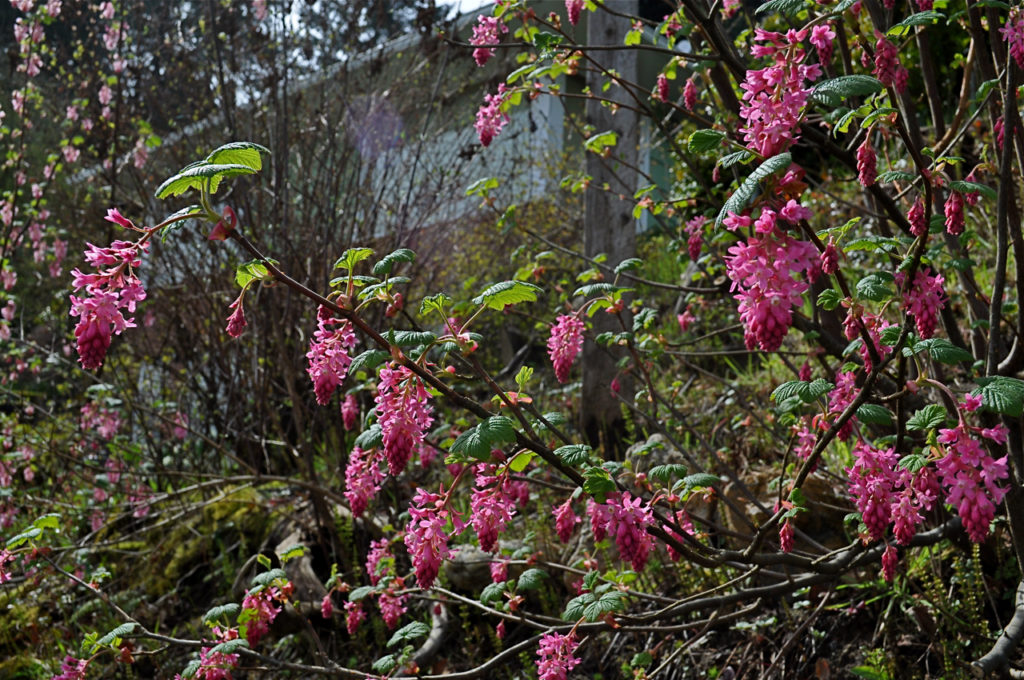
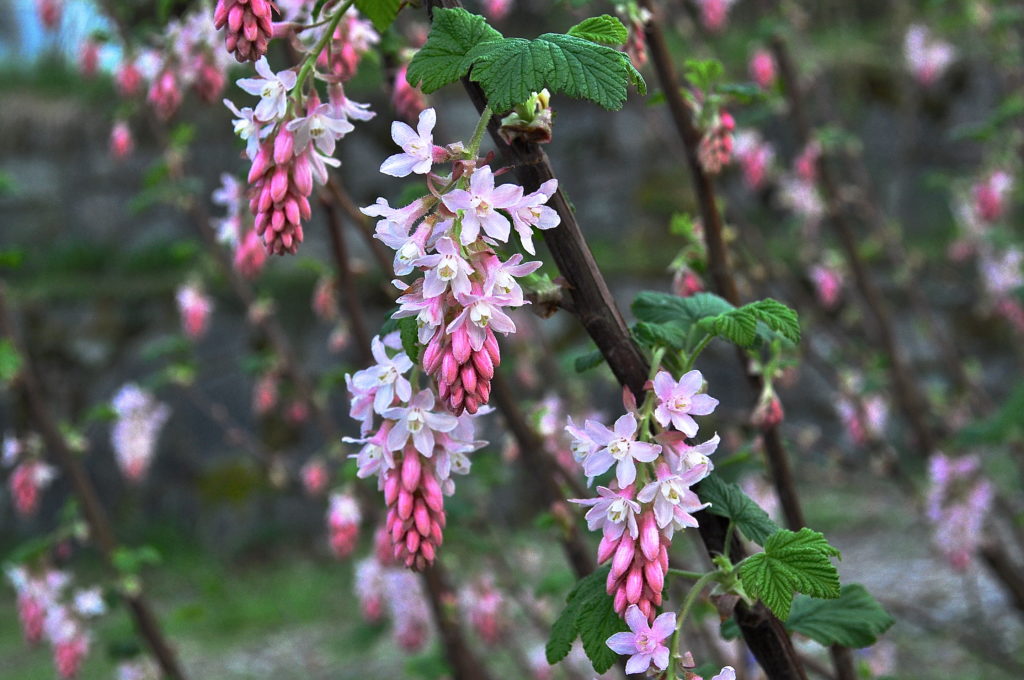
A bit early this year… it’s the glorious bloom time of our native flowering currants (Ribes) in Portland and the Pacific Northwest. These shrubs simply drip in flower power.

Among my favorites are the pink flowering currant, Ribes sanguineum var. glutinosum (above) and Ribes sanguineum ‘Brocklebankii’ (below) with golden foliage that holds its color all season with afternoon shade.
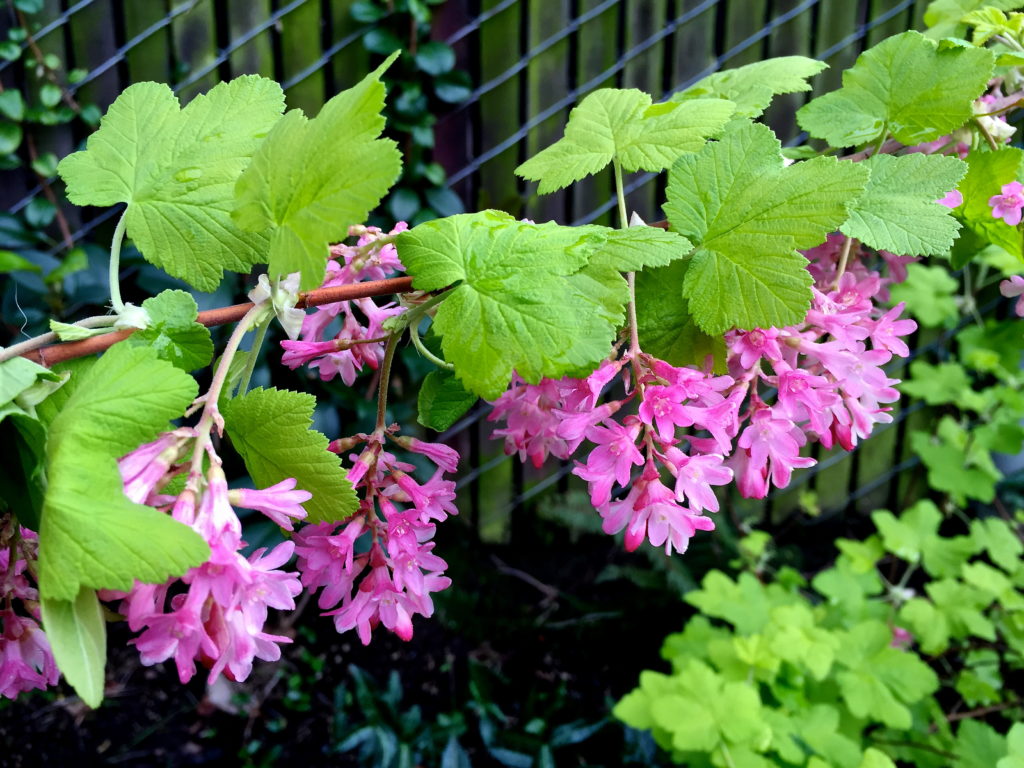
HGD-Ribes sanguineum 'Brocklebankii'

Filed Under: gardens

Plant of the Week – Penstemon pinifolius

June 16, 2014 By Bob Hyland

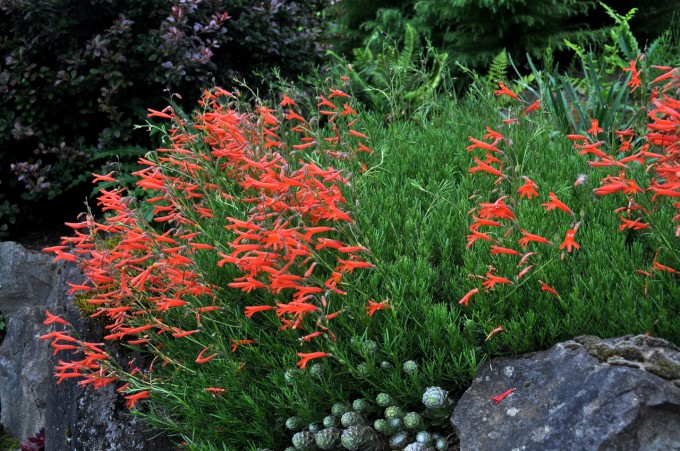
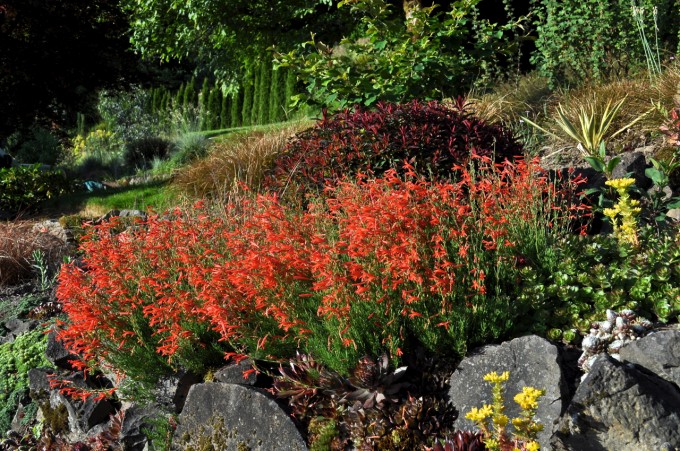
HGD-Penstemon pinifoliusPLANT OF THE WEEK – Penstemon pinifolius (western pine-leafed penstemon). USDA Zone 5a (-15º to -20ºF) Scrophulariaceae
I love this penstemon for its small needle-like leaves and masses of flared, trumpet-like, 1″ long brilliant orange/red flowers in late spring and early summer. Forms 2-foot-wide mounding clumps and is one of the longest lived perennial, evergreen penstemons. Full sun, well drained soil with occasional water in summer. Great in rock gardens or on slopes (pictured in a raised bed along my Harborton Hill driveway).  Cut back hard in early spring. Hummingbirds adore this penstemon!

PS- isn’t it nice against the dark burgundy foliage of Euphorbia polychroma ‘Bonfire’ (another Hyland Garden Design favorite).

Other flower colors:

Penstemon pinifolius ‘Mersea Yellow’ Zone 5a – soft yellow flowers

Penstemon pinifolius ‘Melon’ Zone 5a – lovely light melon colored flowers

HGD-Penstemon pinifolius

Filed Under: gardens

Favorite spring – blooming shrubs

April 3, 2014 By Bob Hyland

During spring garden clean-up and pruning in my Harborton Hill garden, I delight in these fantastic spring blooming shrubs.

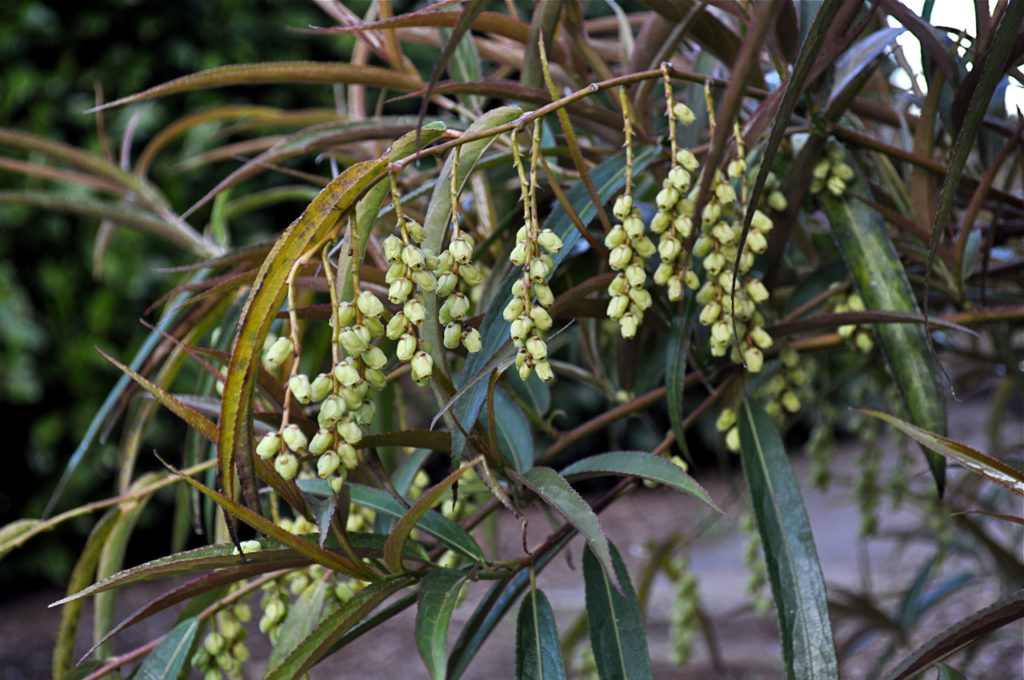
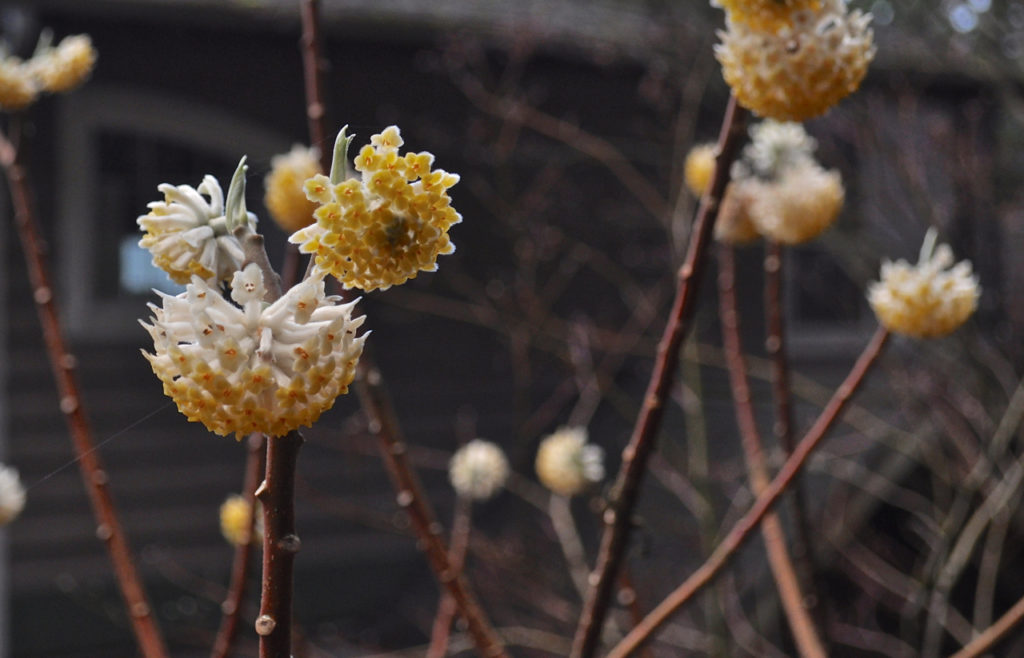
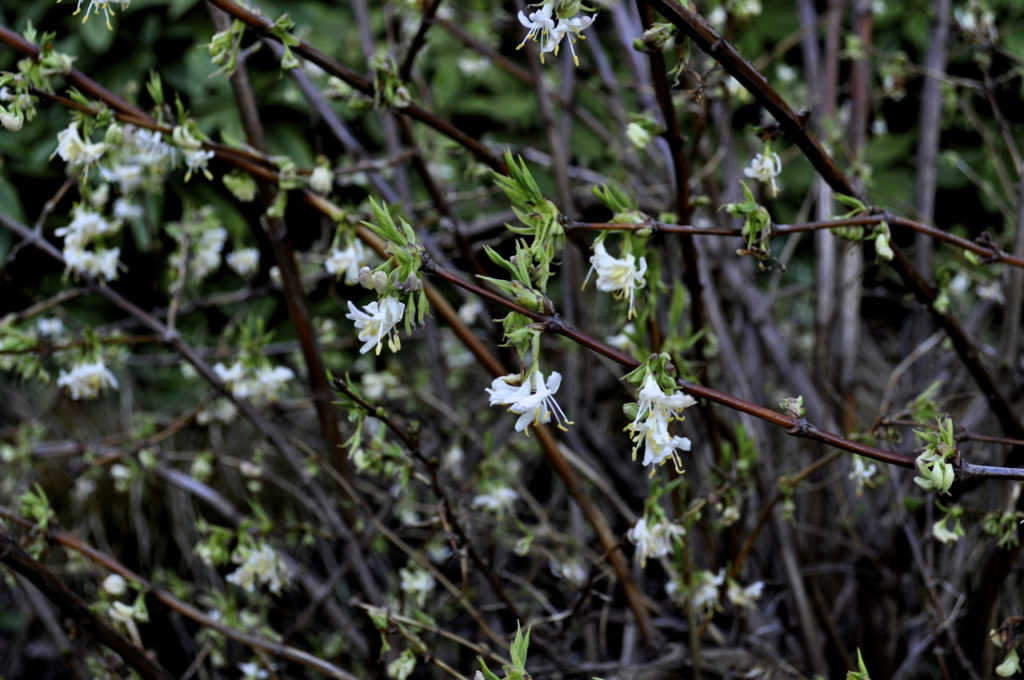
Top to bottom: Lonicera standishii (Fragrant winter honeysuckle), Edgeworthia chrysantha (snow cream), Ribes sanguineum ‘King Edward VII’ (King Edward VII flowering currant), Stachyurus salicifolius


HGD-Stachyrus salicifoliusStachyurus salicifolius is spectacular with it’s pendulous chains of chartreuse urn-shaped flowers.

HGD- EdgeworthiaEdgeworthia chrysantha blooms ahead of its foliage with magnificent umbels of fragrant flowers.

HGD-Lonicera standishiiLonicera standishii (winter honeysuckle) begins blooming in February with sweet-smelling flowers.

HGD-Ribes 'King Edward VII'Ribes ‘King Edward VII’ (flowering currant) drips with clusters of deep pink flowers.


Filed Under: gardens

Color in the Winter Garden… the controlling hand!

February 12, 2014 By Bob Hyland

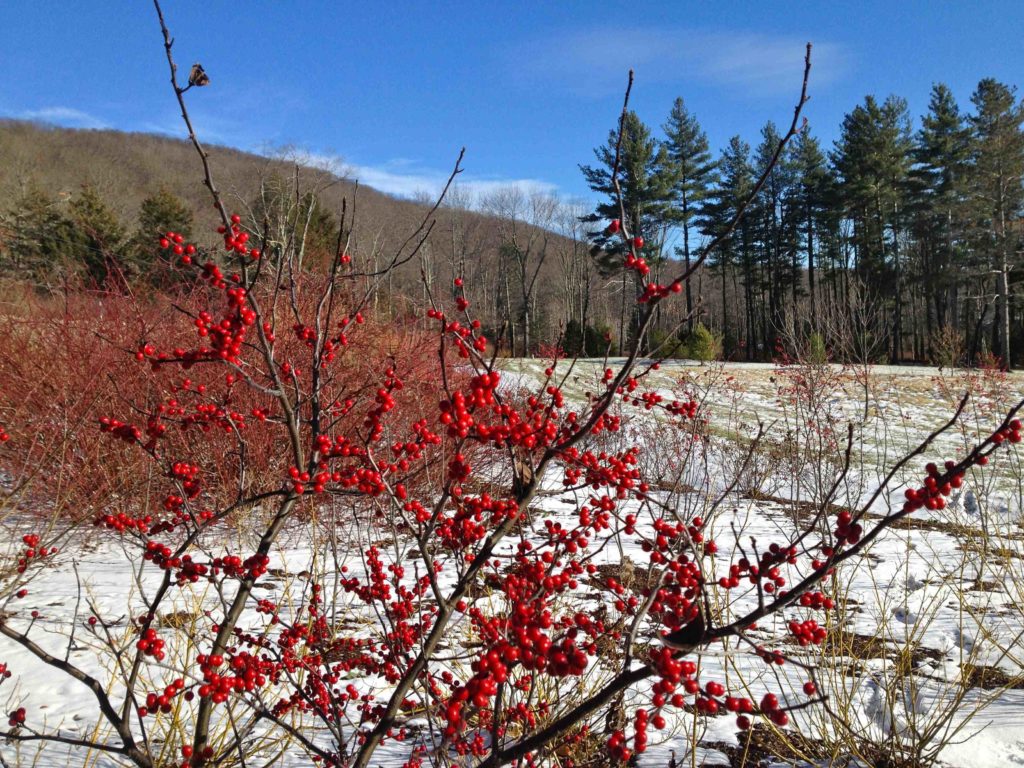
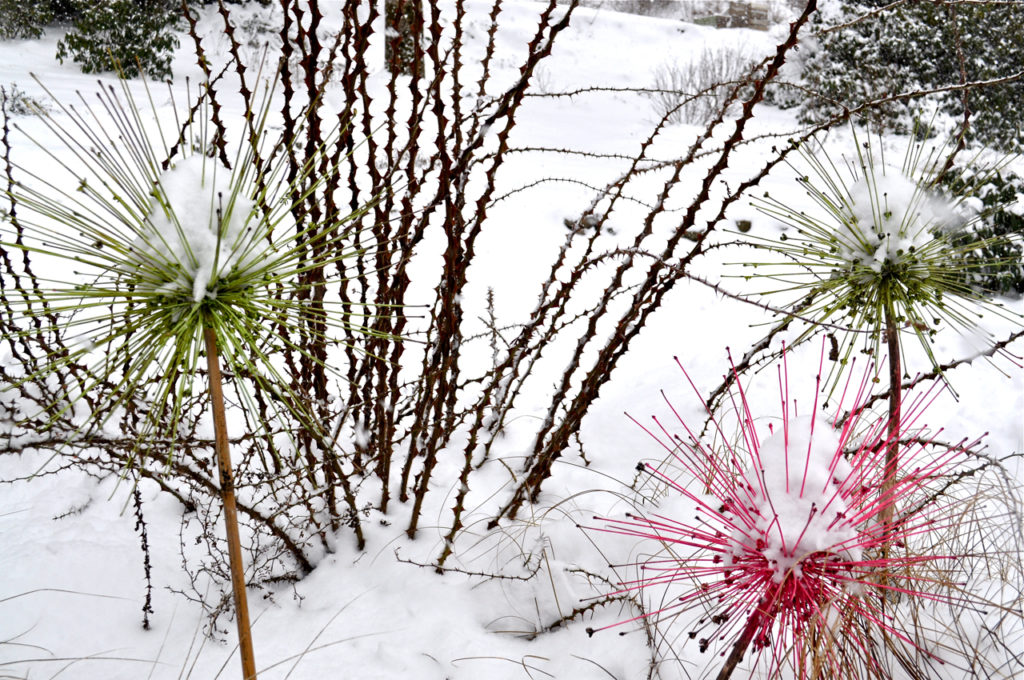
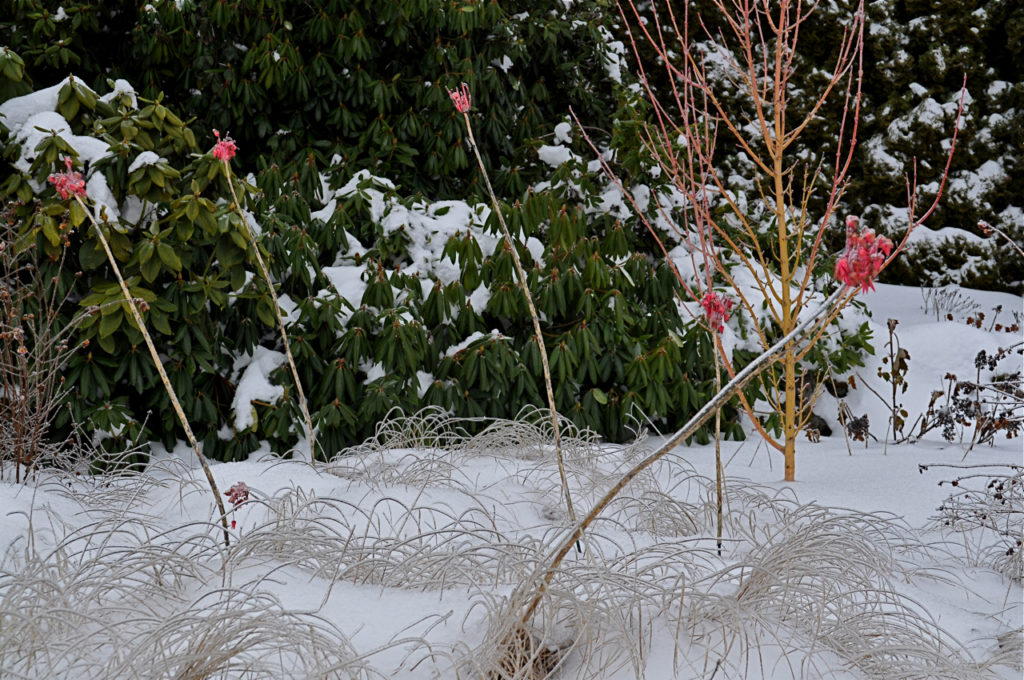
I’m a big fan of good bark, stem color, and fruit in the winter garden. At my former Loomis Creek Nursery in New York’s Hudson Valley, we used willows, shrubby dogwoods, and winterberry hollies with great abandon. Even here in Portland, OR, with a shorter, benign winter and more coniferous landscape, I still promote using these plant genera to brighten up winter gardens. And you can have lots of fun with spray paint… in an artful, controlling way. My garden spray-painting is influenced by Edith Edelman, curator of the 300′ long x 18′ deep Perennial Border at the JC Raulston Arboretum in Raleigh, NC… I’ll have to dig up those slides and post. The JC Raulston Arboretum Perennial Border’s design is based upon the color scheme used by Gertrude Jekyll in her long border at her home, Munstead Wood. It begins with grays and silvers, moves into pastels and from pastels to more saturated colors, culminating in “gorgeousness” presenting intense golds, scarlets, and reds. Just imagine what fun you could have spray-painting ornamental grasses and perennials left standing in the winter garden.

Here is some of my work this winter in my own garden and at the Mountain Top Arboretum.

Winterberry holly (Ilex verticillata ‘Winter Red’) mass planted in my “HEDGEROW” design for Mountain Top Arboretum, Tannersville, NY (below).

winterberriesSpray-painted Allium schubertii against the zigzaggy, wicked stems of Rosa pteracantha in my Harborton Hill, Portland garden.

HARB-Alliums snowpocalypseSpray-painted Allium bulgaricum (Nectaroscordum siculum) drifting through wiry, etched stems of Carex testacea (orange sedge) in a matrix of light, fluffy snow.

HARB-ice storm2:8


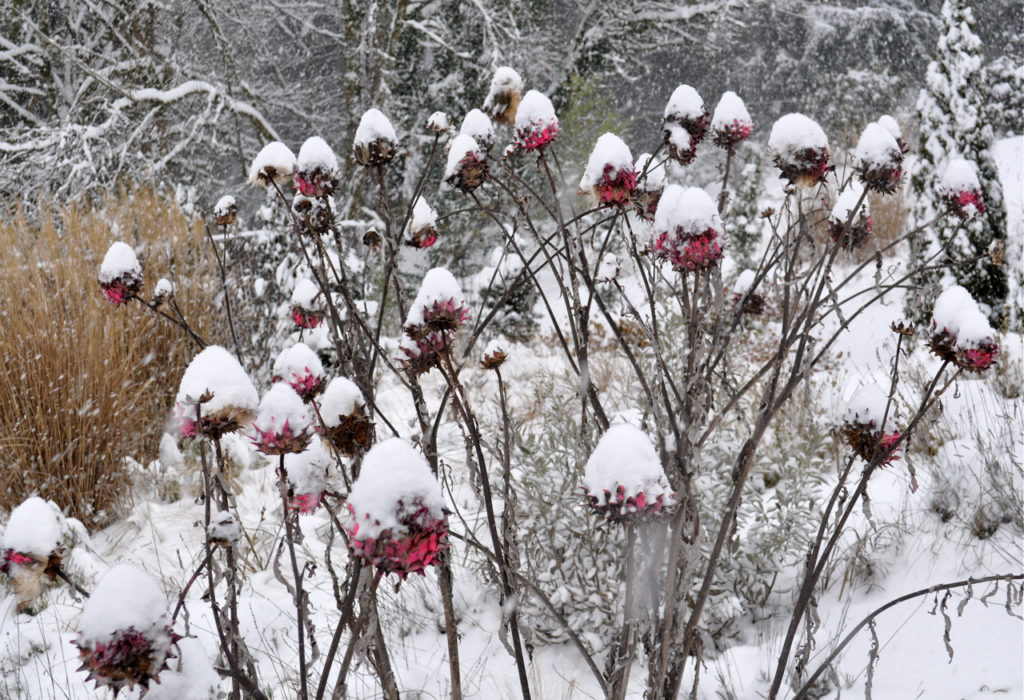
Dried cardoons (Cynara cardunculus) that I hit with a can of pink spray paint…  looking like giant snowcones in Portland’s unusual snow and ice storm, February 6-9, 2014.  BTW, I was a grad student of JC Raulston (we won’t say what decade!) and remember well working in the fledging JC Raulston Arboretum… hence, my spray-painting influence.

HARB-Artichoke snowcones2

Filed Under: gardens

Winter Interest… in 3 days!

December 6, 2013 By Bob Hyland

HARB-Salvia elegans (pineapple sage)

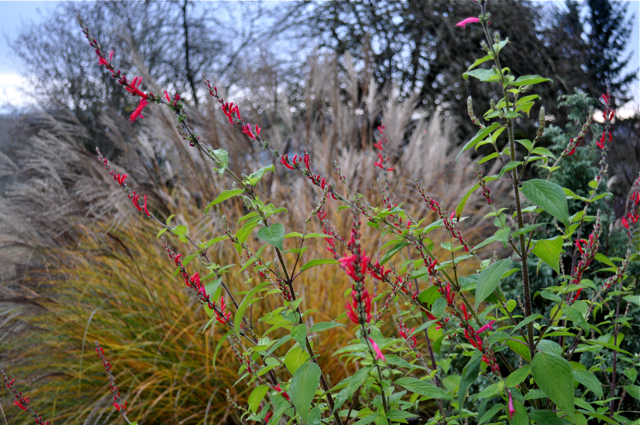
On Tuesday, December 3rd, I still had some annuals and perennials paying no mind to the calendar in Portland. To my delight, tender Salvia elegans (pineapple sage) was in full bloom, obviously enjoying the short days and cool nights of late fall. We often planted this salvia in our Loomis Creek Nursery borders in New York’s Hudson Valley (USDA hardiness zone 5b), but the growing season just wasn’t long enough to bring it into flower. It would taunt me by showing reddish bud color on the cusp of floral glory… and then “ZAP” our first freeze (anytime from late September to mid-October) blackened the plant. It’s a different story here in Portland. Salvia elegans has enough time to bloom rather abundantly with small vivid red, tubular flowers that attract our year-round Anna’s hummingbirds. I love to crush a leaf or two of Salvia elegans in one hand to get a hit of fruity pineapple aroma (of course, with a cup of java in the other hand) during my morning walk-about the garden this time of year. But Mother Nature ended that ritual quickly this week.

HARB-Penstemon Enor2

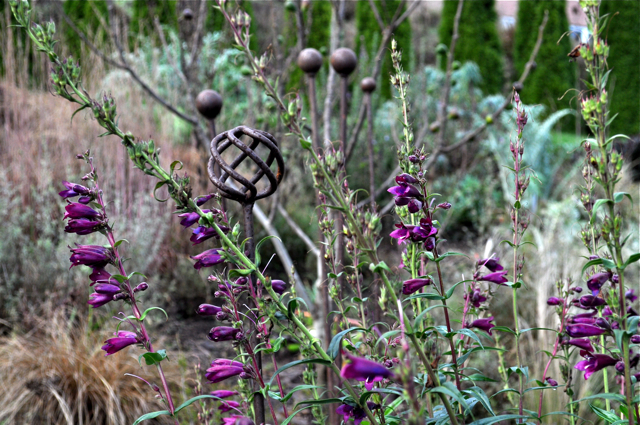
Perennial Penstemon ‘Enor’, with its glossy green foliage and medium-sized, purple tubular flowers was also a standout in the garden early this week. Sporting its second bloom after a mid-summer cutback, this penstemon seemed to be taunting the approaching cold weather.

Three days after these photos, on Friday, December 6, my hillside slope was frozen and covered with 1 inch of snow. I’d been warned about these Arctic blasts and cold East winds roaring out of the Columbia River gorge. “And so it goes”… as the American journalist Linda Ellerbee used to say.

HARB-12:6 Eucomis pole-evansii

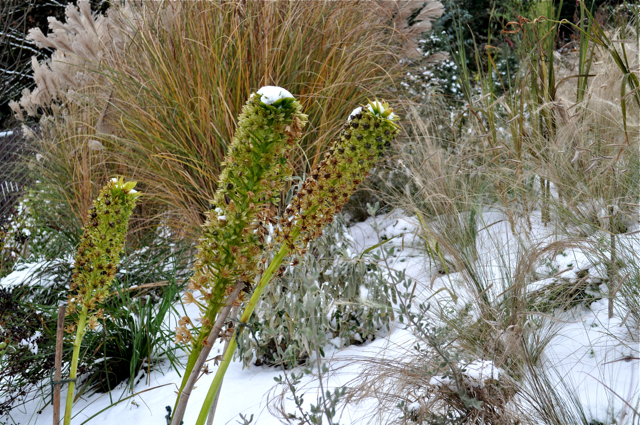
Whoosh! My garden is now awash in winter garb. I laugh about seeing the spent flower stems of the giant pineapple lily, Eucomis pole-evansii, still standing against a background of Miscanthus sinensis ‘Morning Light’. I thought for sure they’d quickly turn to mush in sub-freezing temperature. This isn’t the kind of winter interest I used to go on about back East. It’s new, different and joyful to me. I just hope the ground doesn’t freeze too deeply that these South African bulbs are bothered for next summer’s show.


Filed Under: gardens

Grasses Keep on Ticking

November 23, 2013 By Bob Hyland

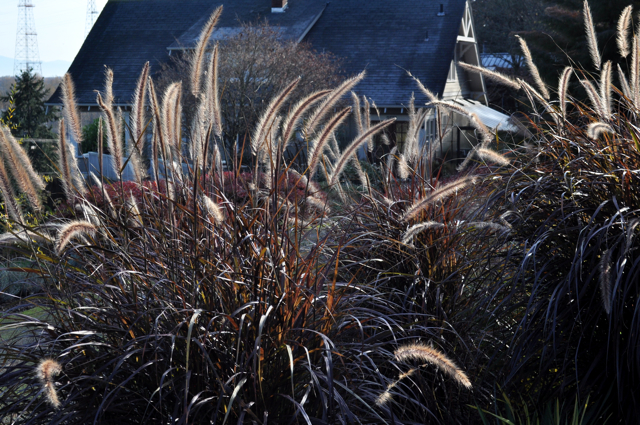
HARB-Pennisetum RubrumNovember 21st, 2013… see that white frost on our house roof? The growing season came to a halt this week in Portland with nighttime temperatures falling into the mid-20s. Cannas, dahlias, Eucomis, and other tender suspects blackened quickly, but ornamental grasses carry on. Grasses, sedges, and rushes are mainstays in my designs… my gardens wouldn’t be without them!

The first picture is Pennisetum x advena (syn. setaceum) ‘Rubrum’, a fountain grass I was so hoping to be winter-hardy in my move to Portland. But it remains an annual grass that I would never be without, in the ground or containers. Purchased and replanted every season, it’s definitely worth the investment and lives up to my “bang for the buck” mantra. The foliage begins to lose its reddish burgundy hue and sheen in late November, but the foxtail flower spikes are architectural and luminescent when backlit by late fall sun (as photographed on 11/22/13).

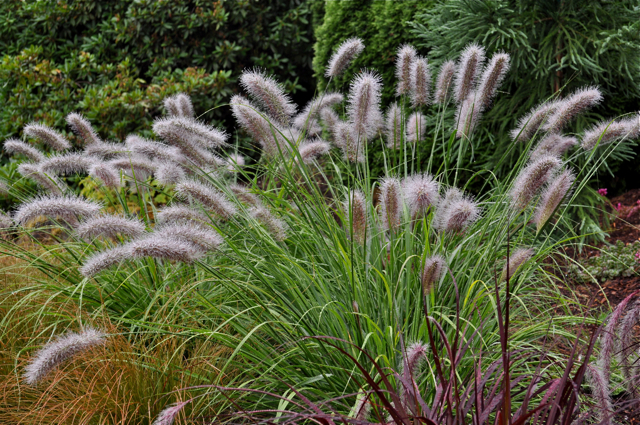
HARB-Pennisetum MoudryAnother fountain grass that is a perennial mainstay in our garden (no need to replant every year) is Pennisetum alopecuroides ‘Moudry’ (black fountain grass). Its flowerheads are stockier and more blunt than than red pennisetum, but the fuzzy flowers (spikelets) are magnificent when laden with frosty dew or freezing fog (we have a lot of that in the Pacific Northwest).

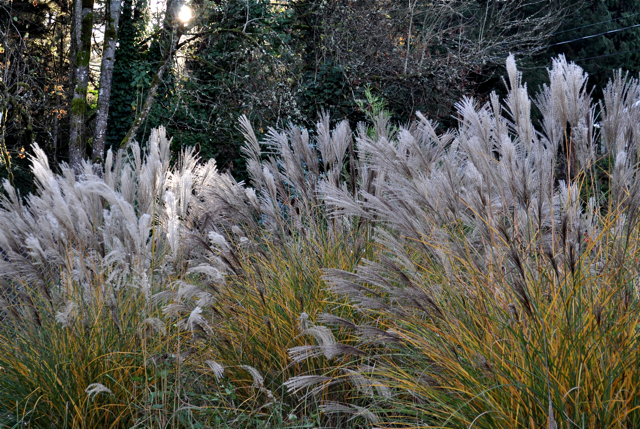
HARB-Miscanthus Morning LightOn our hillside where I need a taller grass, it’s Miscanthus sinensis ‘Morning Light’ (4 to 6 feet tall). I’ve positioned several clumps on a north-facing slope where morning sun illuminates it. This time of year, when the sun is very low in the sky only occasional shafts of light stream through the clumps, but focuses your eye on the silvery flower plumes and grass blades shifting from green to yellow-gold.


Filed Under: gardens

Contained Exuberance, my storefront is open!

June 26, 2013 By Bob Hyland

POTTED-showroom

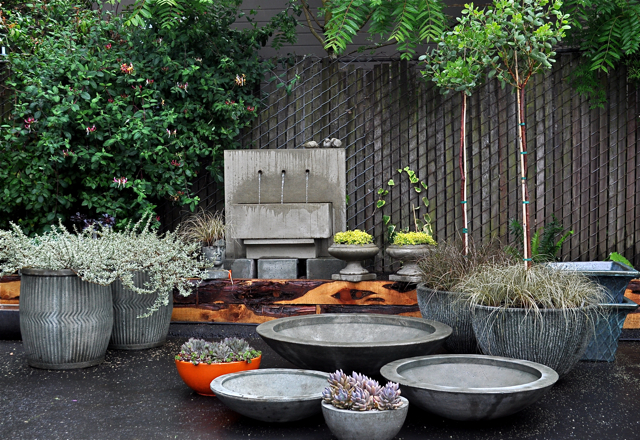
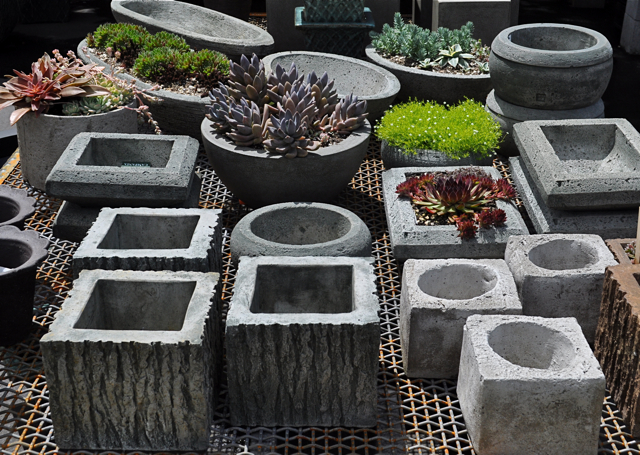
Contained Exuberance, Contemporary Pots & Plantings for the Garden is now open at 1114 SE Clay Street (at SE 11th Avenue) in Portland, OR.  Thursday thru Sunday, 10am – 6pm (closed Monday – Wednesday). I feature cast stone and lightweight containers with artful shape, form, and texture. Much of my inventory right now is from Campania International, a Pennsylvania-based company who offers an extensive range of products in a variety of materials and styles from cast stone to earthenware and lightweight materials that replicate the look of lead, iron, concrete, terra-cotta, and limestone.

Other pottery manufacturers and lines will be added to Potted going forward… as I find product that fits my brand and style and where there is customer demand. So tell me what you like.

Potted shares its retail space with Xera Plants, growers of a fantastic catalog of climate-adapted, water-wise plants for Northwest gardeners. I feature Xera Plants in my container designs – a good marriage of pots and plants!

Check it out… come visit.

POTTED-tabletop


Filed Under: gardens, pots

Contained Exuberance – my new storefront in Portland, OR

May 6, 2013 By Bob Hyland

Beatrix Farrand planters
A business is always an evolving endeavor, and I am excited to announce a new dimension of Hyland Garden Design, called Contained Exuberance.  I will be opening a branded retail location in inner SE Portland in early June, 2013, at 1114 SE Clay St. (corner of SE 11th Ave. and 1 block south of Hawthorne Blvd.)

I’m returning to my retail roots after moving to fabulous Portland and closing down Loomis Creek Nursery in Hudson, NY, in 2010. Unlike the nursery with thousands of plants to propagate and groom for sale, Contained Exuberance will be more “contained” – at least that’s my hope!  I will carry a selection of modern-inspired containers and pre-planted pots with an emphasis on low-water use.

I’m excited to be sharing the retail location with Xera Plants – a diminutive but power-packed Tualatin, OR, wholesale nursery that, for the past 13 years has sold adventurous and uncommon plants to designers. Xera Plants will continue to grow in Tualatin and serve wholesale customers from the greenhouses, but starting June 6, 2013 will have their own Xera-only retail shop as well.

I look forward to meeting gardeners and “potting up” new relationships.

Watch for details on the store opening.

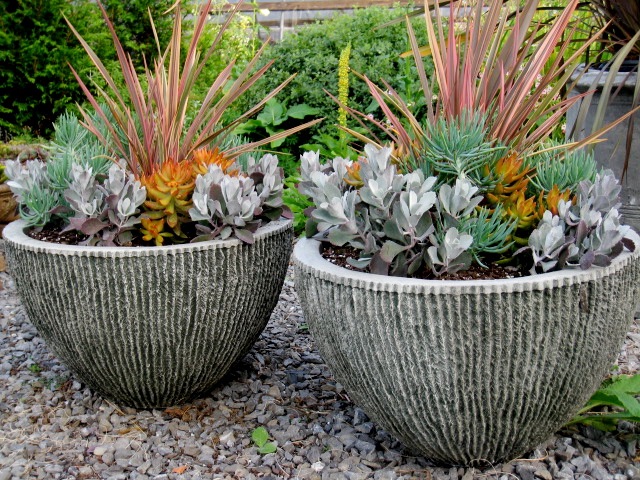
Photo: A cast stone planter based on an original design by Beatrix Farrand, planted with Phormium ‘Flamingo’, orangey Sedum nussbaumerianum, blue pencil-like Senecio ‘Kilimanjaro’ + Kalanchoe pumila ‘Dwarf Blue’.

Filed Under: gardens

Bob’s New Business Adventure

February 25, 2013 By Bob Hyland


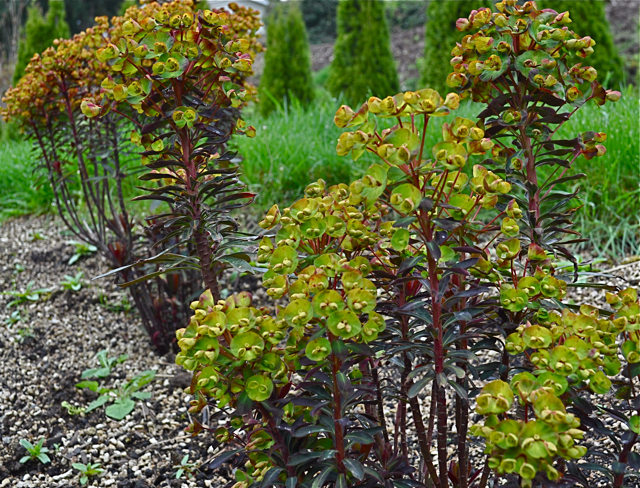
Euphorbia polychroma 'Bonfire'Euphorbia polychroma ‘Bonfire’

Bob Hyland announces the launch of his newly re-named garden design and consulting business… Hyland Garden Design, based in Portland, Oregon. While many of you still associate me with Loomis Creek Nursery in the Hudson Valley, I’m branding new identity here in the Pacific Northwest. I still travel East occasionally to work with a handful of clients and public gardens (see my Garden Galleries on this site). I like being “bi-coastal Bob”, but I’m putting down roots and building the core of my business here in Portlandia.

Check out my new website. If you’re not already a subscriber to my newsletter, I invite you to join. I publish it monthly to keep you up-to-date on “hot” plants, special promotions with my business, and news of garden events, here and there, to put on your calendars.

Contact me if you are in need of a garden design, master plan, or just some coaching. I love to develop long-term relationships with gardeners – particularly those who are driven by a love of plants and good design. The tag line of my former Loomis Creek Nursery still personifies me. Hyland Garden Design – “great plants for adventurous gardeners”.

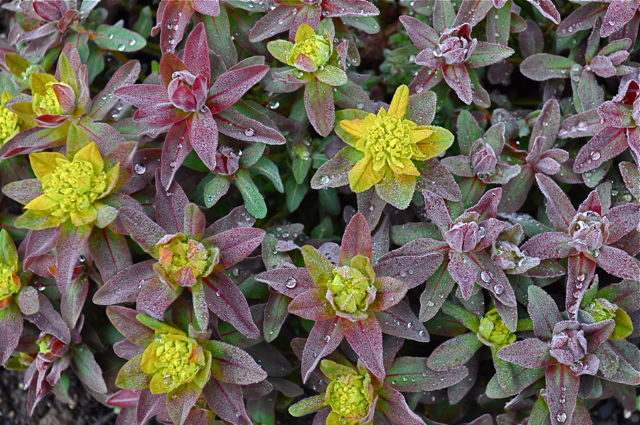
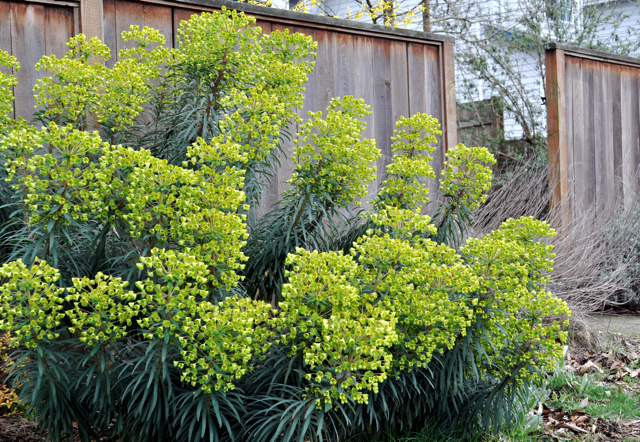
PS – It’s Euphorbia (spurge) time in the garden. I love using Euphorbias in my designs and my list of hardy types has expanded here in Portland. The cushion spurge, Euphorbia polychroma ‘Bonfire’ (picture at top), with its chartreuse-yellow flower bracts and burgundy foliage continues to be a favorite (it was with Loomis Creek Nursery customers, too!). Hardy USDA zones 5-9.

I’m wild about these Euphorbias, too – all for full sun positions in the garden. Note: Broken stems of all exude a white milky sap that can be a skin irritant… best to wear gloves when handling in the garden.

Euphorbia myrsinites

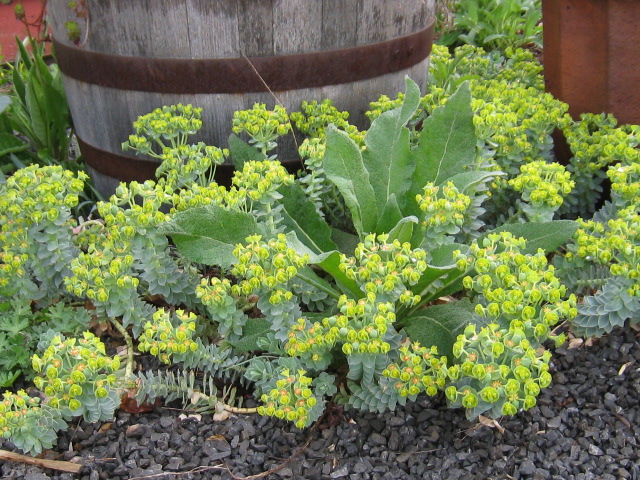
Euphorbia myrsinites (myrtle or donkey-tail spurge) – creeping and crawling on the ground with serpent-like stems. USDA zones 5-9. Note: the species has escaped from garden cultivation and spread to open lands in drier parts of Oregon.

Euphorbia characias subspEuphorbia characias subsp. wulfenii – a taller (3′ to 5′) architectural spurge. USDA zones 7-8. Performs best in Mediterranean climates with dry summers and moderate winters.

Euphorbia 'Blackbird'Euphorbia Blackbird – a bushy, compact euphorbia (18″ to 2′) with dark purple-black foliage. USDA zones 6-9.

Filed Under: gardens Tagged With: specialties

  • « Previous Page
  • 1
  • …
  • 4
  • 5
  • 6

SHOP is CLOSED permanently!

Garden Design & Maintenance Services CONTINUE

PHONE/EMAIL
518.929.0699
BobHyland50@gmail.com


I honor your privacy.

Follow on Instagram

Copyright © 2026 · HYLAND GARDEN DESIGN. 1114 SE Clay St., Portland, OR · Contact · 518.929.0699